Cities are often treated as mere backdrops in cinema—beautiful settings that frame the stories of their characters. But some cities possess such a distinctive identity that they become storytellers themselves. Seoul is one of those rare places.
Modern Seoul is a city of contrasts and constant transformation. It is both ancient and futuristic, crowded yet deeply personal, fast-paced but filled with quiet moments of reflection. Its streets reveal stories of ambition, loneliness, connection, and cultural change. For contemporary short filmmakers, Seoul is far more than a filming location—it is an active participant in the narrative.
In many short films, the city breathes alongside its characters, influencing their choices, emotions, and relationships. Seoul does not simply contain stories; it shapes them.
A City of Contrasts
One of the reasons Seoul fascinates filmmakers is its extraordinary ability to exist between worlds.
Within a single day, a resident might travel from a centuries-old palace district to a hyper-modern business center, from a quiet hillside neighborhood to a neon-lit entertainment district. These visual and cultural contrasts provide filmmakers with endless narrative possibilities.
Seoul embodies many of the tensions that define contemporary urban life:
- Tradition and technological innovation.
- Individual ambition and collective culture.
- Isolation and social connection.
- Rapid development and cultural preservation.
- Global influence and local identity.
Short films are particularly well suited to capturing these contrasts because they often focus on intimate moments that reveal broader social realities.
A five-minute walk through Seoul can become an entire cinematic narrative.
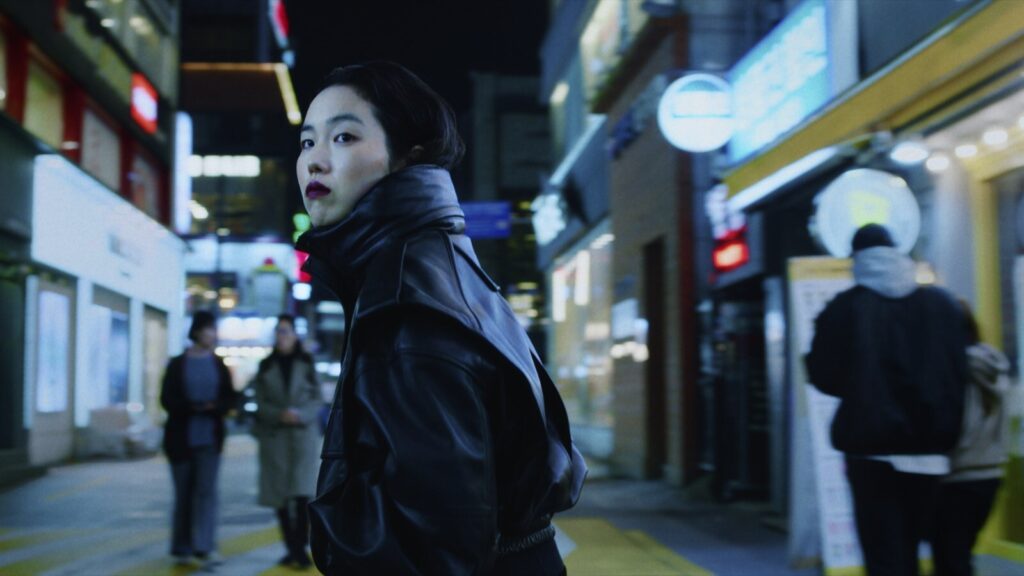
The City as an Emotional Landscape
Urban spaces are never emotionally neutral. The environments we inhabit shape our experiences in subtle but profound ways.
In contemporary short cinema, Seoul frequently functions as an emotional landscape that reflects the inner lives of its characters.
A crowded subway station may symbolize anonymity and loneliness. A quiet café tucked away in a residential neighborhood can become a space for personal transformation. Rain-covered streets illuminated by neon lights might communicate nostalgia, uncertainty, or hope.
Filmmakers increasingly use Seoul’s architecture and atmosphere to express emotions that dialogue alone cannot fully capture.
The city speaks through:
- Its changing seasons.
- Its rhythm of movement and stillness.
- Its architectural contrasts.
- Its public spaces and hidden corners.
- Its relationship between people and place.
Seoul’s visual language has become an essential storytelling tool for contemporary filmmakers.
Personal Stories Within a Megacity
Although Seoul is home to millions of people, contemporary short films rarely focus on the city as a vast metropolis. Instead, they explore individual experiences unfolding within its urban landscape.
These stories often center on:
- Young creatives pursuing their ambitions.
- Students navigating adulthood.
- Elderly residents preserving cultural traditions.
- Migrants building new lives.
- Families adapting to changing social realities.
- Strangers forming unexpected connections.
By focusing on intimate human experiences, filmmakers reveal how urban environments influence personal identities and relationships.
The city’s scale makes these stories even more compelling. In a place that never truly stops moving, moments of human vulnerability become particularly powerful.
Seoul reminds audiences that even within the world’s busiest cities, every individual story matters.
Why Short Films Capture Urban Life So Well
Short-form cinema possesses unique advantages when portraying urban experiences.
Cities are collections of fleeting moments—a glance exchanged on public transportation, a conversation overheard in a small café, or a solitary walk through familiar streets at night. These experiences naturally lend themselves to concise and emotionally focused storytelling.
Short films excel at capturing:
- Everyday urban rituals.
- Emotional snapshots of contemporary life.
- Small moments that reveal larger social themes.
- The atmosphere of particular neighborhoods and spaces.
- Human experiences that might otherwise go unnoticed.
Rather than attempting to present a comprehensive portrait of Seoul, short films often focus on singular experiences that communicate something universal about life in modern cities.
Sometimes, ten minutes is all that is needed to understand an entire world.

Urbanism Through Human Perspectives
Contemporary Korean short films frequently explore how rapid urban development affects human relationships and individual identities.
Seoul’s transformation into one of the world’s most technologically advanced cities has created new opportunities and challenges that resonate far beyond South Korea.
Filmmakers examine questions such as:
- How does urban life influence our sense of belonging?
- Can people remain emotionally connected within increasingly digital societies?
- What traditions survive in rapidly changing environments?
- How do individuals find moments of stillness amid constant movement?
These themes are not uniquely Korean. They reflect experiences shared by urban communities across the globe.
By presenting Seoul through personal narratives, filmmakers create stories that are simultaneously local and universal.
The Visual Poetry of Seoul
Few cities offer filmmakers such a diverse visual palette. Seoul’s cinematic appeal lies not only in its scale but in its remarkable attention to detail.
Short filmmakers frequently capture:
- Quiet residential alleyways.
- Rooftop views overlooking the city skyline.
- Traditional markets filled with everyday interactions.
- Modern architectural landmarks.
- Seasonal changes that transform familiar spaces.
- Nighttime cityscapes illuminated by countless lights.
These environments contribute significantly to the emotional atmosphere of contemporary short films.
The city becomes a visual metaphor for transformation itself—a place where old and new continuously coexist and reshape one another.
Seoul’s beauty is not merely aesthetic. It is deeply narrative.
A Global City With Local Stories
Despite its international reputation, Seoul remains profoundly shaped by the experiences of its residents. Contemporary short cinema demonstrates that global cities are ultimately defined by the people who inhabit them.
The most memorable urban stories are rarely about landmarks or skylines. They are about individuals searching for connection, meaning, and identity within the spaces they call home.
This human-centered approach has become one of the defining characteristics of contemporary Korean short filmmaking.
International audiences are drawn to these films not because Seoul feels exotic or unfamiliar, but because its stories reveal experiences that resonate universally.
Urban life may look different across cultures, but many of its emotional realities remain remarkably similar.
When Cities Tell Stories
Seoul’s growing influence in contemporary cinema reflects something larger than architectural beauty or cultural popularity. It demonstrates how cities themselves can become meaningful narrative forces.
In short films, Seoul is often portrayed as a companion to its characters—a witness to their struggles, aspirations, and transformations. Its streets become places where personal histories intersect with broader cultural and social changes.
The city’s complexity makes it uniquely suited to contemporary storytelling. It invites filmmakers to explore not only where people live but also how places shape who they become.
Ultimately, Seoul is more than the setting of these stories. It is their silent protagonist.
And through the lens of short cinema, audiences around the world are discovering that sometimes the most compelling character in a film is the city itself.